
On 10 December 2025, around 150 Bulgarian people gathered in front of the European Parliament in Brussels to call upon the resignation of the incumbent government. While Brussels isn’t an unusual location for Bulgarian diaspora activism, most of these people were there to express support for their fellow citizens in Bulgaria, despite being abroad and feeling the physical distance more acutely than ever.
This presence added a supportive and hopeful note to the protests back home, which were marked by extremely high turnout and warm atmosphere. People chanted “ostavka” (resignation) and “mafia” alongside the protests notable songs, united by the common goal, namely a better future for our families and friends in Bulgaria.
As Bulgarians took the streets for the second time this month, the reasons why may seem rather unfamiliar to some. For locals, however, this feels like the only possible response given the current government’s decisions.
But let’s take a step back and look at what sparked this movement.
On 1 December 2025, tens of thousands of Bulgarians went out for the first time in the capital, Sofia, and other major cities such as Plovdiv and Varna, in what Deutsche Welle describes as “the biggest protests the Balkan country has seen for years.” Deutsche Welle also notes that Bulgaria is one of the most corrupt countries in the EU, with only Hungary tanking worse in terms of perceived corruption.
They did this response to what many view as a highly corrupt government and the new financial budget for 2026. Now, 10 days later, these nation-wide protests were bigger and better organised, attracting even larger crowds, even those living abroad.
What sparked Bulgaria’s December 2025 protests
A few days before the mass protests on 1 December, the Bulgarian budget committee was scheduled to assemble for a regular meeting. However, two hours before the announced time, the committee convened urgently, a move that infuriated the chairman of “We Continue the Change” Assen Vasilev. He stormed into the hall, asking: “Who ordered this disgrace?” Vasilev also repeated multiple times that the meeting will not proceed in this way, highlighting that what was happening was “totally scandalous.”
After this spread rapidly on social media and local news, the party organised a protest to call on the government to withdraw the first budget. According to the proposed budget social security contribution and taxes would increase, hitting working people. Additionally, while the minimum salary for 2026 were overseen to rise with just €70 going from 551 per month to €620.20 as of the new year. This increase was criticised as insufficient given inflation and cost-of-living pressure.
The first budget also proposed doubling the dividend tax from 5% to 10%, while also overseeing a significant deficit and financial expanded spending without clear long-term revenue offsets. Despite criticism from Brussels and economists, the government stated that this was “the only possible option.”
Beyond the budget issue, the protests are also rooted in long-standing frustration with entrenched political corruption, particularly within the GERB (Citizens for European Development of Bulgaria) and DPS (Movement for Rights and Freedom), parties, whose leaders – Delyan Peevski and Boyko Borissov – the protesters have repeatedly called on to resign.
Who is Delyan Peevski?
Mr. Delyan Peevski is a Bulgarian politician and who the leader of the Bulgarian party DPS which traditionally represents Bulgaria’s Muslim minorities. He is also a former media power broker in Bulgaria and has been accused in corruption many times – not only in the country but also abroad, including sanctions from both the UK and the US.
In 2021, the United States sanctioned Peevski under the Global Magnitsky Act, accusing him of engaging in bribery, manipulating media channels, and exerting sway over judicial decisions. Two years later, in 2023, UK foreign secretary James Cleverly announced a separate round of sanctions, asserting that Peevski had exploited his official role by diverting state funds for his own gain.
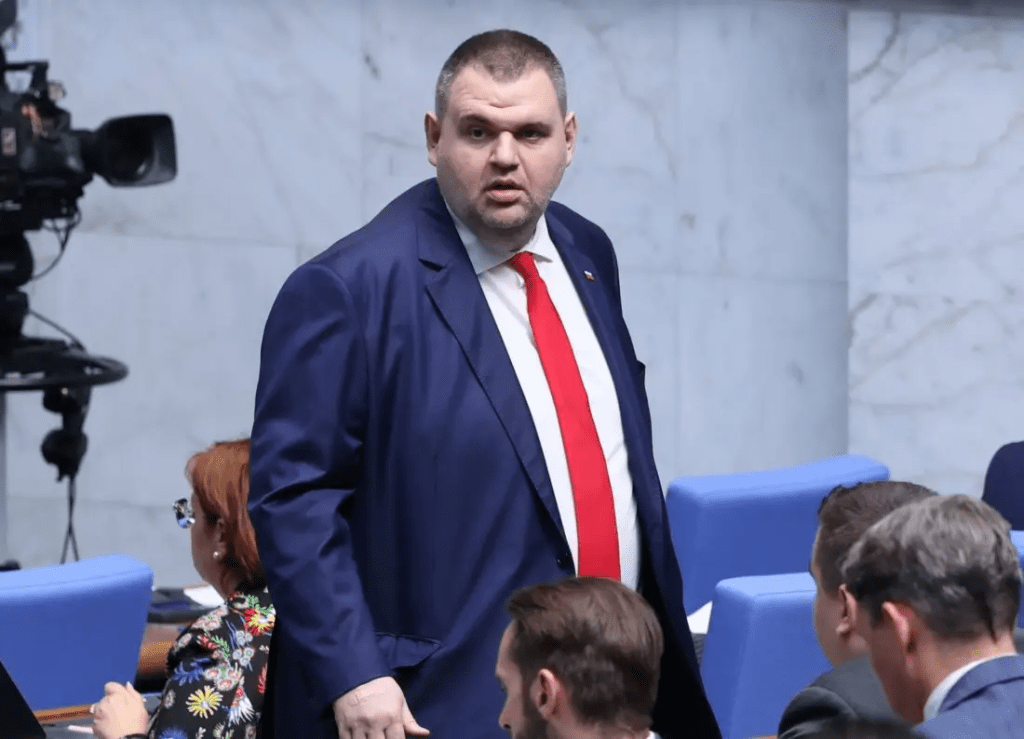
Instead of being politically marginalised, writes Dimitar Keranov, “Peevski has reemerged as a central actor in Bulgaria’s legislative landscape.”
These are just several of the things what Peevski is known for. For people in Bulgaria, his reputation extends far beyond these examples. He is also known for his media ownership and control. Although he was not the formal owner, many major Bulgarian newspaper were widely understood to be under his influence.
How media outlets covered the protests
The first media portrayal of the protest on 1 December was not shocking but deeply disappointing, both locally and internationally. While the protests were at its peak, very few outlets reported directly on their scale and the enormous turnout.
Instead, local and international media such as Reuters focused disproportionately on small groups of hooligans who set trash bins on fire. These are most likely fringe provocateurs, who dirtied the name of protest making it look like something completely different than what it actually was.
From these provocateurs, 71 were detained at the night of the protests. According to the Lyubomir Nikolov, Chief Commissioner of Sofia Directorate of Internal Affairs, reported that among the detained was a person who carried 31,000 lev supplemented by notes with street names. Nikolov also said that they speculated that the money had to be handed over to certain people who would distribute it to other participants in the provocations.
Thanks to social media and independent creators, people could follow live broadcasts and social media stories and see that the demonstrations were overwhelmingly peaceful often accompanied by singing and dancing, even traditional Bulgarian music. This reveals the striking contrasts between on-the-round reality and the media coverage.
However, the protests on 10 December were portrayed differently. Apparently public rage online pushed the media to focus not only on the hooligans but also the broad participation of youth, families, and peaceful demonstrators gathered to defend their rights.
On 10 December, protests were organised not only in Bulgaria but also across Europe in major cities such as Berlin, Barcelona, Brussels, Vienna, and The Hague among others. Bulgarians scattered around the continent gathered in solidarity with their fellow citizens to call upon the resignation of the current government and condemn the status quo.
If these actions succeed and the government does resign, then it is up to the Bulgarian citizens to vote and elect another government.
 3xpwriting
Leave a comment